

Egypt Travel News · Updated 23 November 2026
Six minutes of darkness over Luxor: how to plan for 2 August 2027
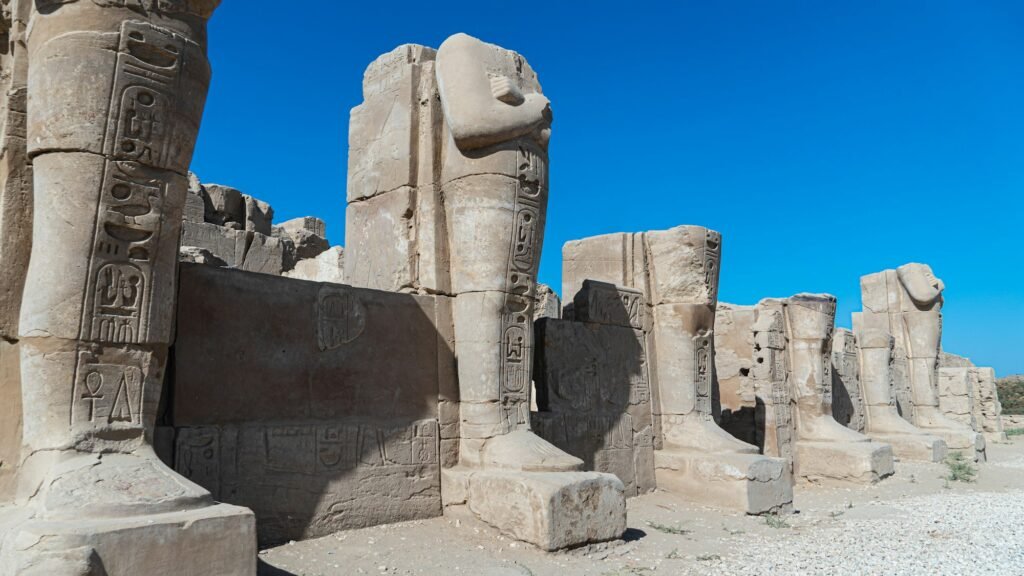
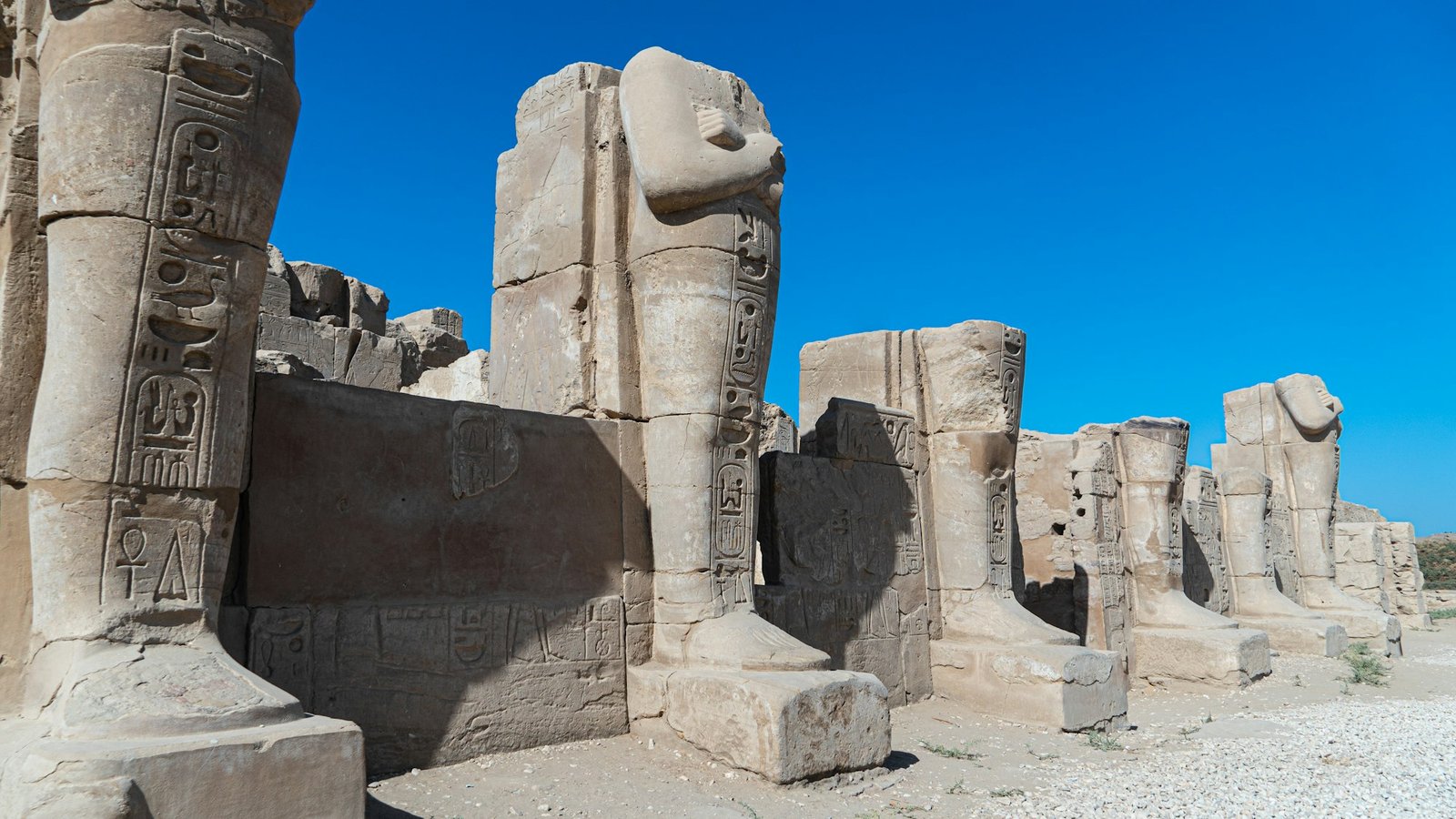
Photo: Sean Wang on Unsplash
On Monday, 2 August 2027, the Moon will cover the Sun completely for about six minutes and 22 seconds over Luxor, according to Ahram Online. It is the second-longest total solar eclipse of the 21st century, and it crosses one of the richest archaeological landscapes on Earth. Tour operators abroad already report sold-out departures, so here is what we know, what is still uncertain, and how to plan.
6 min 22 s
of totality over Luxor
2 Aug 2027
a Monday, early afternoon
~1:05 pm
maximum eclipse, local time
10+
overseas markets with limited or sold-out eclipse tours
The short version
- The eclipse is on Monday, 2 August 2027, with about 6 minutes 22 seconds of totality in Luxor.
- Cairo sees only a partial eclipse, so you need to travel into the path, for example to Luxor.
- Operators abroad already report limited or sold-out tours, so fix your dates early.
- Viewing sites are not yet confirmed and August heat is extreme, so keep your plan flexible.
We are a Cairo-based private tour operator. This guide combines official statements and press reports with the planning we do for guests every week. Egypt is still finalising its viewing arrangements, so confirm details before you pay for anything.
The eclipse at a glance
Totality is the short window when the Moon fully hides the Sun. It only happens inside a narrow path, and how long it lasts depends on where in that path you stand. Egypt sits close to the centre of this one.
| Location | Totality | Notes |
|---|---|---|
| Луксор | About 6 min 22 s | Near the centre line and a focus of the ministry’s viewing plans |
| Assiut | About 6 min 8 s | Also inside the path |
| Siwa Oasis | About 5 min 31 s | The second focus for planned viewing events |
| Cairo and Giza | Partial only | No totality, so travel south or west to see it |
NASA’s calculations put the maximum at roughly 6 minutes 23 seconds near Luxor. The only longer total eclipse this century happened on 22 July 2009. Local time in August is UTC+3, because Egypt is on summer time. Press reports place the partial phase at roughly 11:40 am to 2:26 pm, with maximum around 1:05 pm.
Why Luxor is the place to be
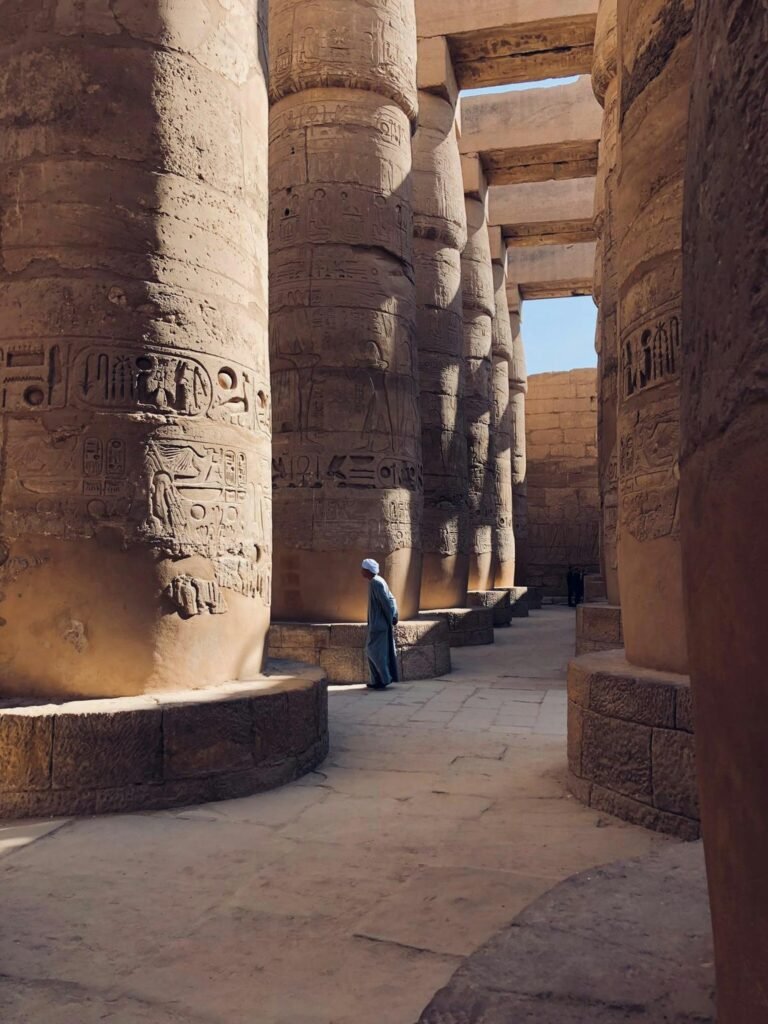
Luxor combines a very long totality with the Valley of the Kings, Karnak and Luxor Temple. Karnak is already known for its solar alignments, which makes the setting hard to beat. The date also falls in Luxor’s quiet season for international visitors but in the busy summer period for Egyptian and Gulf travelers, so rooms may be tighter than the season suggests.
Photo: Karnak Temple, Luxor, by Lynn Van den Broeck on Unsplash
What Egypt is preparing
A national committee formed in May held its first meeting in September under Tourism and Antiquities Minister Sherif Fathy. It is looking at viewing locations, visitor services, transport and safety. The ministry says it will work with local authorities to find sites with restrooms, cafés and basic facilities, and it is studying domestic flights and road links so visitors already in Egypt can add the eclipse to their trip.
Officials in Luxor are also reviewing museum and archaeological site opening hours for the day. In practice, this means you should not assume you can watch from inside a particular temple. Plan around the official arrangements once they are announced.
How early should you book?
Ahram Online reported on 27 October 2026 that operators in at least 10 overseas markets already had limited or sold-out eclipse tours. Independent travelers face the same squeeze on flights and rooms. Our advice is to decide now, not in spring.
1
Be in Luxor the day before. Do not gamble on travel on eclipse day itself.
2
Secure flights and rooms first. They are the scarce items, and a tour is easier to add later.
3
Read the cancellation terms. Dates this popular deserve a careful look at what you can change.
4
Stay flexible on the viewing spot. Official sites are not final. Check our visa guide for entry rules too.
Heat, clouds and eye safety
Plan for extreme heat
August is among the hottest months in Upper Egypt, and daytime temperatures often pass 40°C. Visit the Valley of the Kings or Karnak early, keep midday for shade or air conditioning, and carry a hat, sunscreen and plenty of water. Space.com reports that most tour groups plan to watch from the grounds of air-conditioned five-star hotels. For a broader look at the seasons, read our best time to visit Egypt guide.
Protect your eyes
Use certified eclipse glasses throughout the partial phases. Ordinary sunglasses are not safe. Looking directly at the Sun is safe only during the brief period of complete totality, and you should put the glasses back on as soon as it ends.
Skies are likely, but not guaranteed
Observations since 2000 show clear skies on 2 August, according to Timeanddate’s historical analysis. That is climate history, not a forecast, so it supports choosing Egypt without promising a clear sky.
Three ways to plan your eclipse trip
Option 1
Day trip from Cairo
Our Eclipse Luxor 2027 day trip leaves Cairo by shared overnight bus on 1 August. It covers the Valley of the Kings, Karnak and Luxor Temple with a private Egyptologist, plus breakfast and lunch. The viewing spot will be set around official arrangements.
Option 2
Stay in Luxor
Arrive a couple of days early and visit both banks of the Nile at a relaxed pace. This is the most comfortable plan in the heat. See our Luxor day tour and Luxor page.
Option 3
A longer Egypt trip
Combine Cairo, Aswan and Luxor, or add a Nile cruise. Compare our 6-day and 8-day packages, the Nile cruises and our cruise vs land tour guide, then ask us to build it around 2 August.
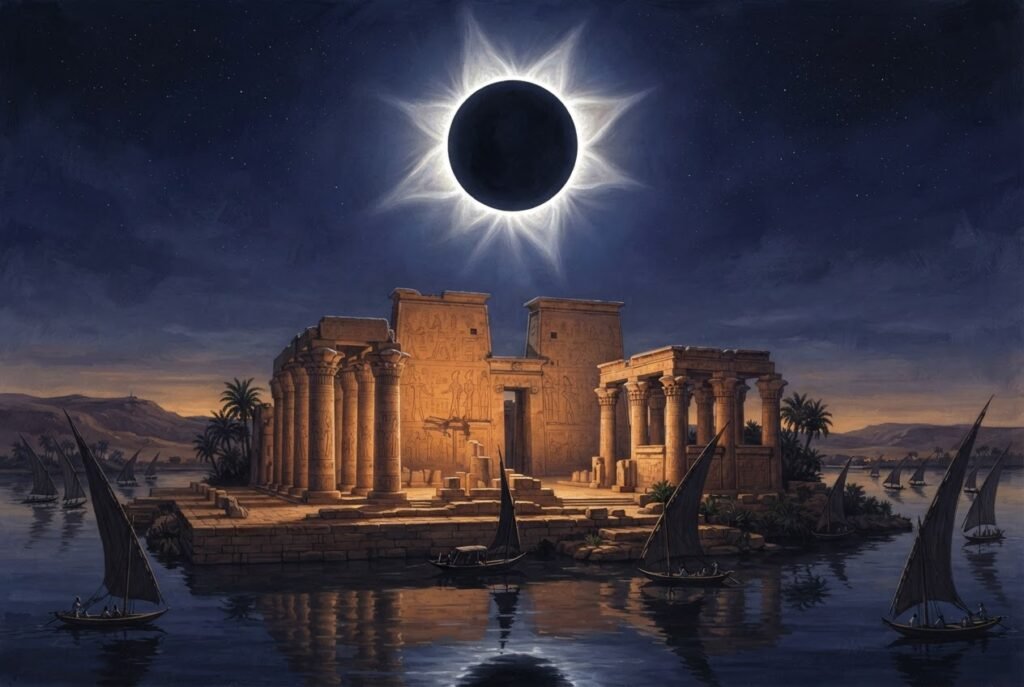
Eclipse day at a glance (approximate local times)
Morning
Early start at the monuments, before the heat builds.
About 11:40 am
Partial phase begins. Put on your eclipse glasses.
About 1:05 pm
Maximum eclipse, with about 6 minutes 22 seconds of totality in Luxor.
About 2:26 pm
Eclipse ends. Time for a late lunch and air conditioning.
Budget note: our private tour prices do not include entrance fees or hotels. Add temple and tomb tickets and your Luxor stay separately, and ask us early about hotel availability for that week.
Frequently asked questions
When is the total solar eclipse in Egypt?
On Monday, 2 August 2027, with maximum eclipse around 1:05 pm local time near Luxor.
How long will totality last in Luxor?
About 6 minutes 22 seconds. NASA’s maximum near Luxor is roughly 6 minutes 23 seconds, and your exact position in the path changes the figure slightly.
Can I see the total eclipse from Cairo or Giza?
No. Cairo sees a partial eclipse only. To see totality you need to be inside the path, for example in Luxor, Assiut or Siwa.
Is it safe to look at the eclipse?
Use certified eclipse glasses during the partial phases. Direct viewing without protection is safe only during complete totality.
What should I bring to Luxor in August?
Light clothing, a hat, sunscreen, comfortable walking shoes, plenty of water and certified eclipse glasses. Temperatures often pass 40°C.
Are Sand Kings Tours prices inclusive of entrance fees and hotels?
No. Entrance fees and hotels are not included in our prices, so budget for them separately.
Plan your 2027 eclipse trip with Sand Kings Tours
Tell us your dates, group size and interests, and our Cairo team will reply with a clear private plan for Luxor and the rest of your Egypt trip.